We are excited to launch our n…
✨ Church History

The History of St. Mark’s Cathedral

Established in the early 19th century, St. Mark’s Cathedral has stood as a beacon of Christian faith in Bengaluru.

The History of St. Mark’s Cathedral: A Legacy of Resilience

Established in 1808 by Rev. John Dunsterville, a peer of Rev. Richard Hall Kerr, St. Mark’s Cathedral is the oldest Anglican church in Bangalore. From its humble beginnings as a garrison church for the East India Company to its status today as the Cathedral of the Karnataka Central Diocese, its story is one of architectural ambition, tragic setbacks, and a community that refused to let its spirit fade.

St. Mark’s Cathedral
St. Mark’s Cathedral View
Our story so far

Seeing God’s faithfulness in every step.

1808

The Foundation

The foundation stone is laid. The church began as a simple, barrack room like structure built for the British troops of the East India Company stationed in Bangalore.

1816

Consecration of the Church

The church is officially consecrated by the Bishop of Calcutta.

1901–1906

Expansion and Structural Collapse

An ambitious expansion project begins to accommodate a growing congregation. However, in 1901, the new structure collapsed. It was painstakingly rebuilt and reopened in 1906.

1923

The Great Fire

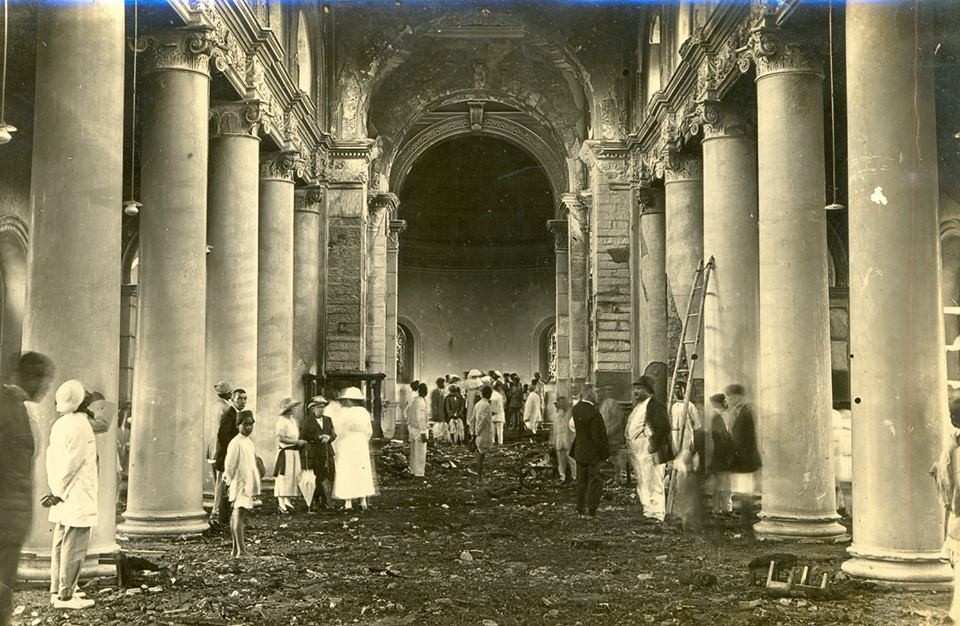
Disaster strikes again. A massive fire caused by a robber guts the cathedral, leaving only the shell of the building.

1924

Collapse During Restoration

During restoration, the weakened structure collapses yet again.

1927

Final Reconstruction

The cathedral is finally fully reconstructed and restored to the majestic form we see today.

1947–1961

Transition to the Church of South India

Following Indian Independence, the church joined the Church of South India (CSI) and was elevated to Cathedral status in 1961.

2000

Entering the New Millennium

With renewed focus on outreach, youth ministry, and social service initiatives, the Cathedral strengthened its mission to serve the city beyond Sunday worship.

2012

Bicentennial Celebration

St. Mark’s Cathedral celebrated 200 years of faithful ministry. Special thanksgiving services, cultural programs, and community gatherings marked this historic milestone.

β€œThe steadfast love of the Lord endures forever.”

β€œThe Lord has done great things for us, and we are filled with joy.”

β€” Psalm 126:3
Today

A Living Legacy

Today, CSI St. Mark’s Cathedral continues to be a vibrant church serving Bengaluru through worship, sacraments, charitable outreach, youth programs, and community engagement.

Standing strong for over two centuries, the Cathedral remains a symbol of faith, heritage, and hope in the heart of the city.
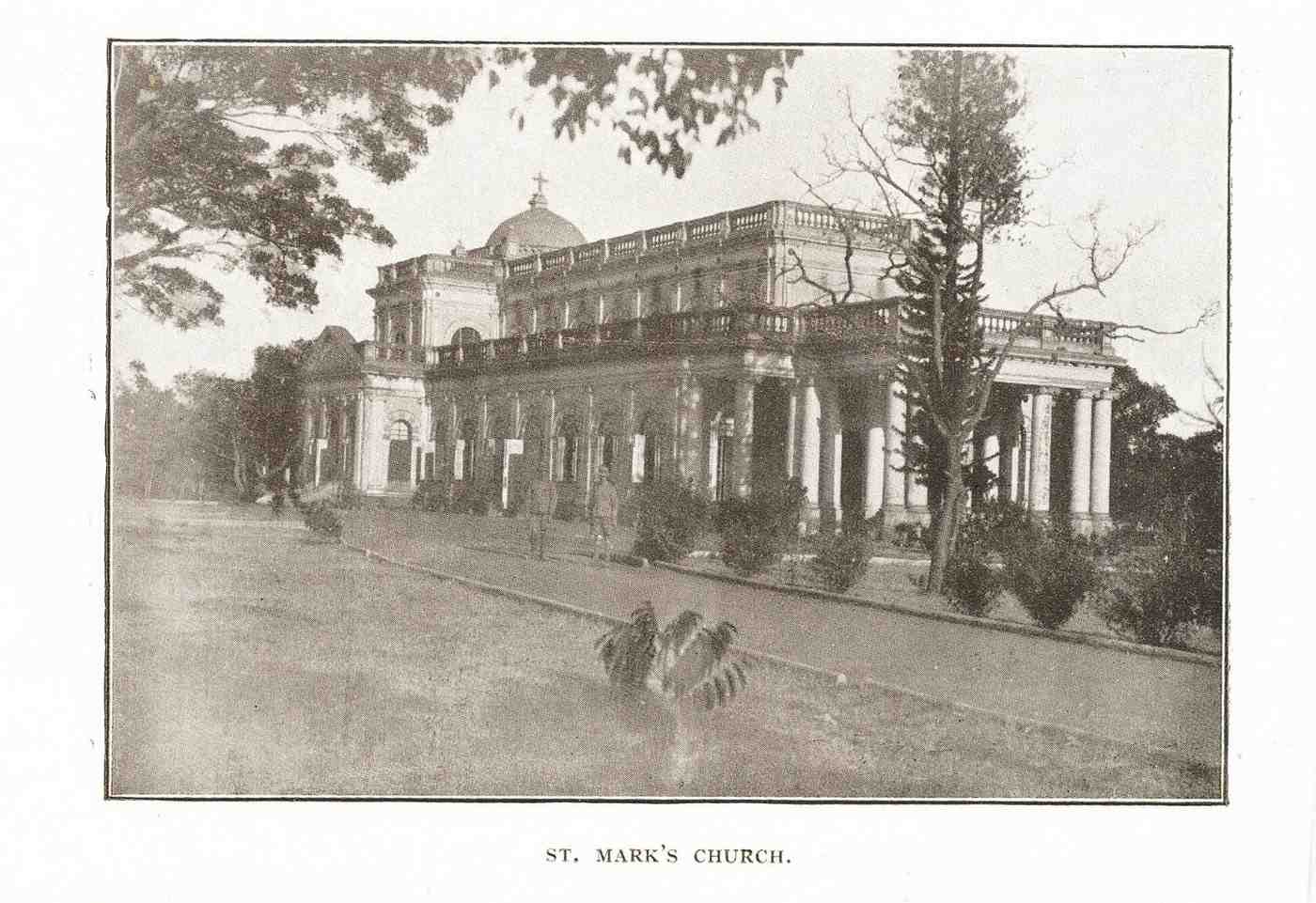
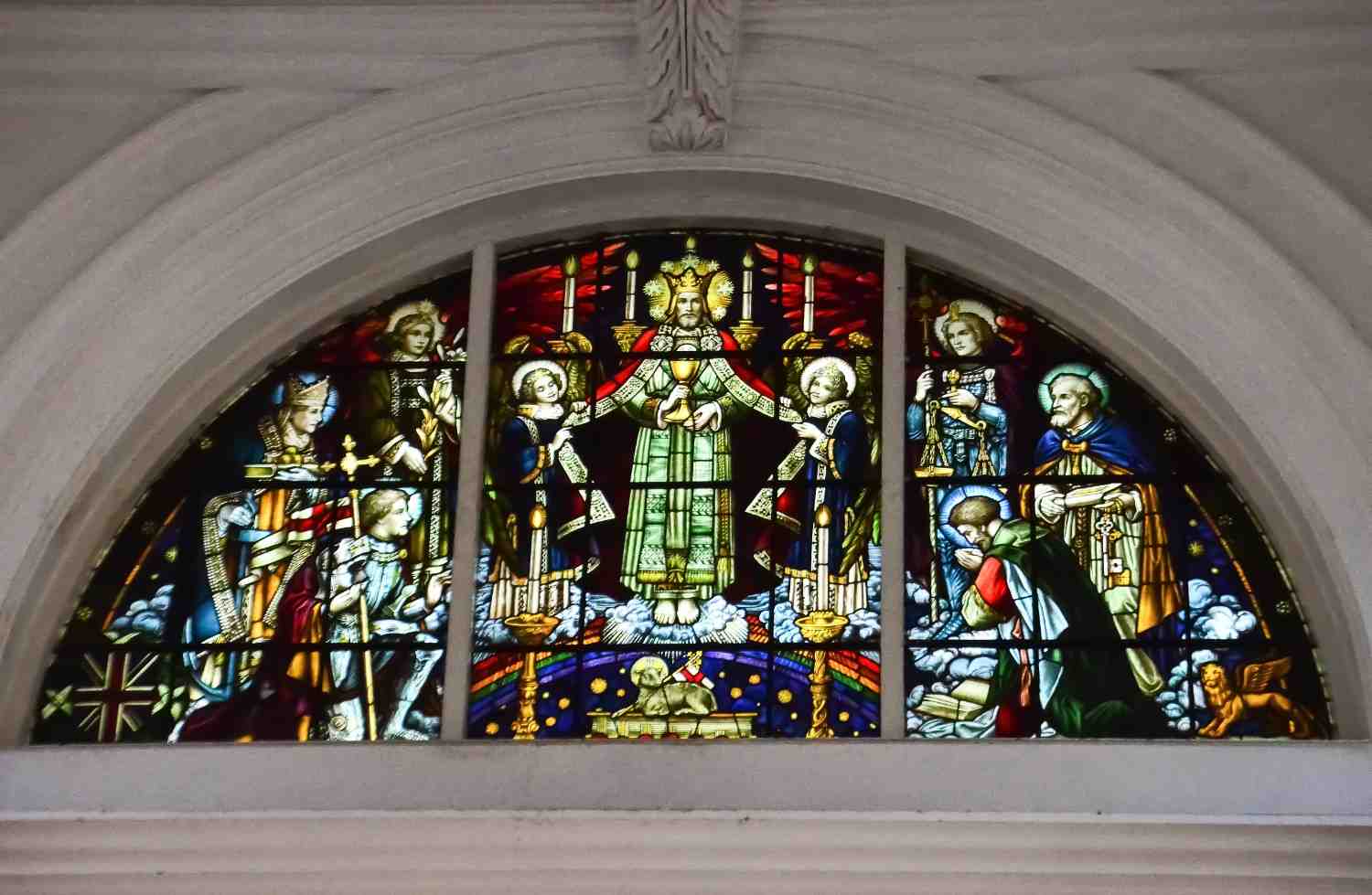
Architectural Grandeur

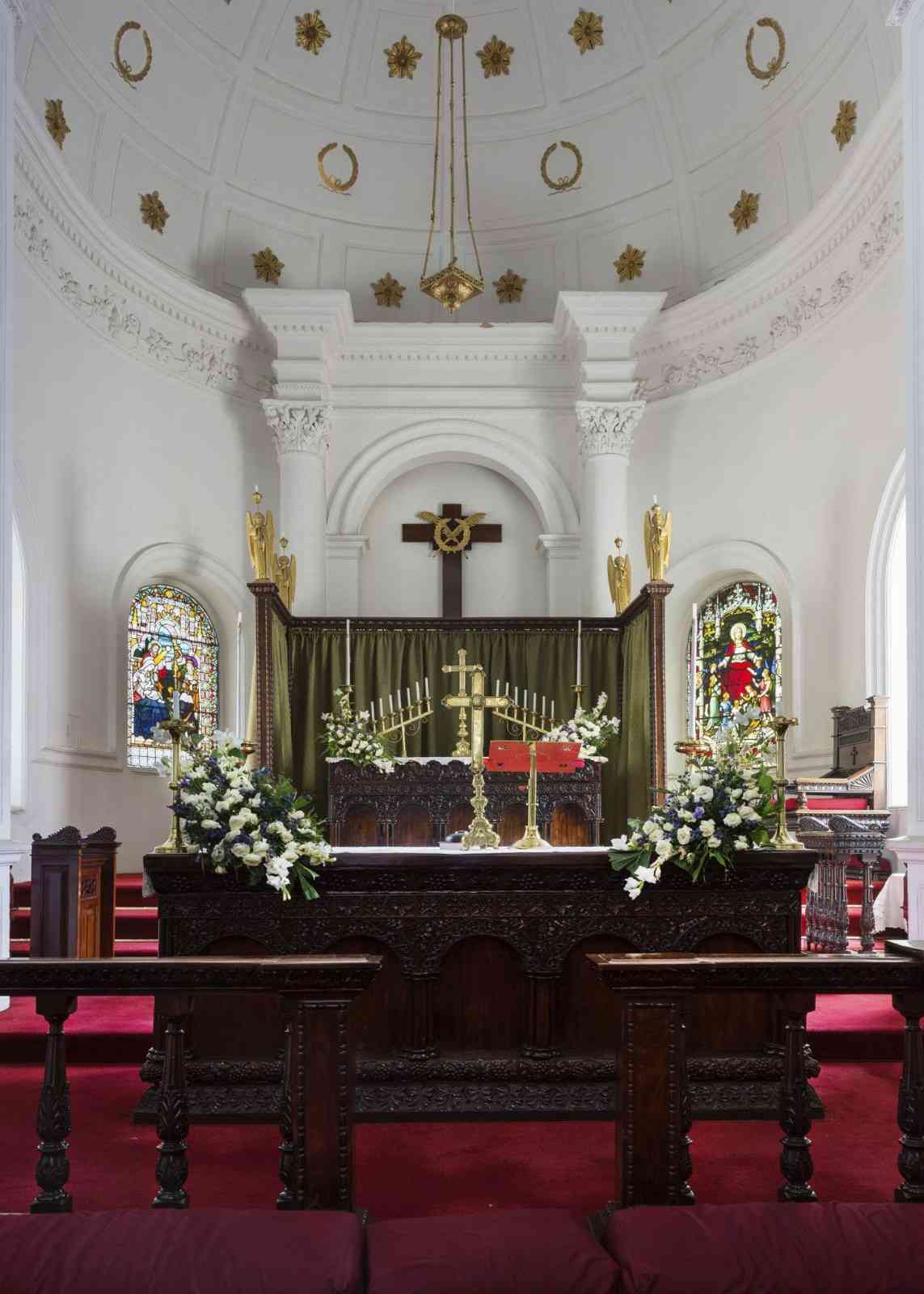
RIBA architect James Ransome in 1902 inspired by the dome of 17th-century St. Paul’s Cathedral in London, replaced the ruined tower of St. Mark’s with a dome that is a masterpiece of English Baroque architecture.

Church View 1
Church View 2
Church View 3
Church View 4

The Dome

A graceful, majestic dome that sits atop a semi-circular chancel, defining the Bangalore skyline.

The Arches and Corinthian Columns

Elegant arches and Corinthian columns, create a sense of rhythm and classical beauty.

Woodwork

The entrance features intricate, ornate carvings and exquisite woodwork.

Stained Glass

Vibrant windows that filter light into the sanctuary, depicting biblical themes and historical figures.

The Bell

Known as one of the best-maintained external bells in India. It replaced the peal of 8 bells destroyed when the new tower collapsed in the Christmas season of 1901.

First for Electricity

Bangalore was the first city in India to get electricity (1905), and St. Mark’s was one of the first churches to be electrified in 1908.

Military Ties

The cathedral still houses the "Military Colors" of the 77th Moplah Rifles, buried in the west wall after the regiment was disbanded.

Did You Know?

  • The Church Transformed: A 19th-century historian once described the original 1808 building as "one of the ugliest buildings ever erected," comparing it to a common matchbox.
  • Today, it is considered one of the most beautiful buildings in the city, a tribute to noted RIBA architect James Ransome whose architectural prowess transformed a ruined building into a beautiful cathedral.

A Sanctuary for All

Earlier a church where Sir Walter Scott’s son, the Hussars regiment of Winston Churchill, the grand parents of the noted hunter Kenneth Anderson, the benefactor of Bishop Cotton School, James; were some of the significant members of the Church.

The church was served by chaplains such as Rev. William Malkin who transformed an escaped convict into a personal cook and Rev. Samuel Thomas Pettigrew who established schools for the lesser privileged Eurasians and orphans.

Today, St. Mark's Cathedral stands as a "House of Prayer for all People." Beyond its Sunday services, it is a hub for social causes, music recitals, and a quiet refuge for anyone seeking peace amidst the chaos of MG Road.

The cathedral is open for all people irrespective of religion or faith.

The foundation stone was laid in 1808, and construction was completed in 1812. The church was consecrated by the Bishop of Calcutta in 1816. The church was expanded in 1901, and went through reconstruction in 1927. The church had its beginnings as a garrison Anglican church. It became part of the Church of South India after Indian independence in 1947, going on to be the Cathedral of the Karnataka Central Diocese in 1961.

When it began as a garrison church in 1808 of the Madras Army of the East India Company, it has a seating capacity of 400. As a result of the number of members growing to 2000, a new building was constructed in August 1902, with a seating capacity of 700. However, this new church building collapsed, and had to be rebuilt again in 1906. On 17 February 1923, the church building was ravaged by fire (caused by short circuit) and restoration had to take place. However, as the renovation works were about to be completed in February 1924, the church building again collapsed. Reconstruction of the church started in 1926 and was completed in 1927.

The first Indian Presbyter of the cathedral was Rev H F J Daniel, who was installed as the Presbyter-in-charge in 1961.

Over Two Centuries of Faith

For more than 200 years, CSI St. Mark’s Cathedral has stood as a witness to faith, resilience, and transformation. From colonial Bangalore to modern Bengaluru, the Cathedral remains a sacred landmark in the heart of the city.

Architectural Heritage

Classical European influence blended with South Indian heritage.

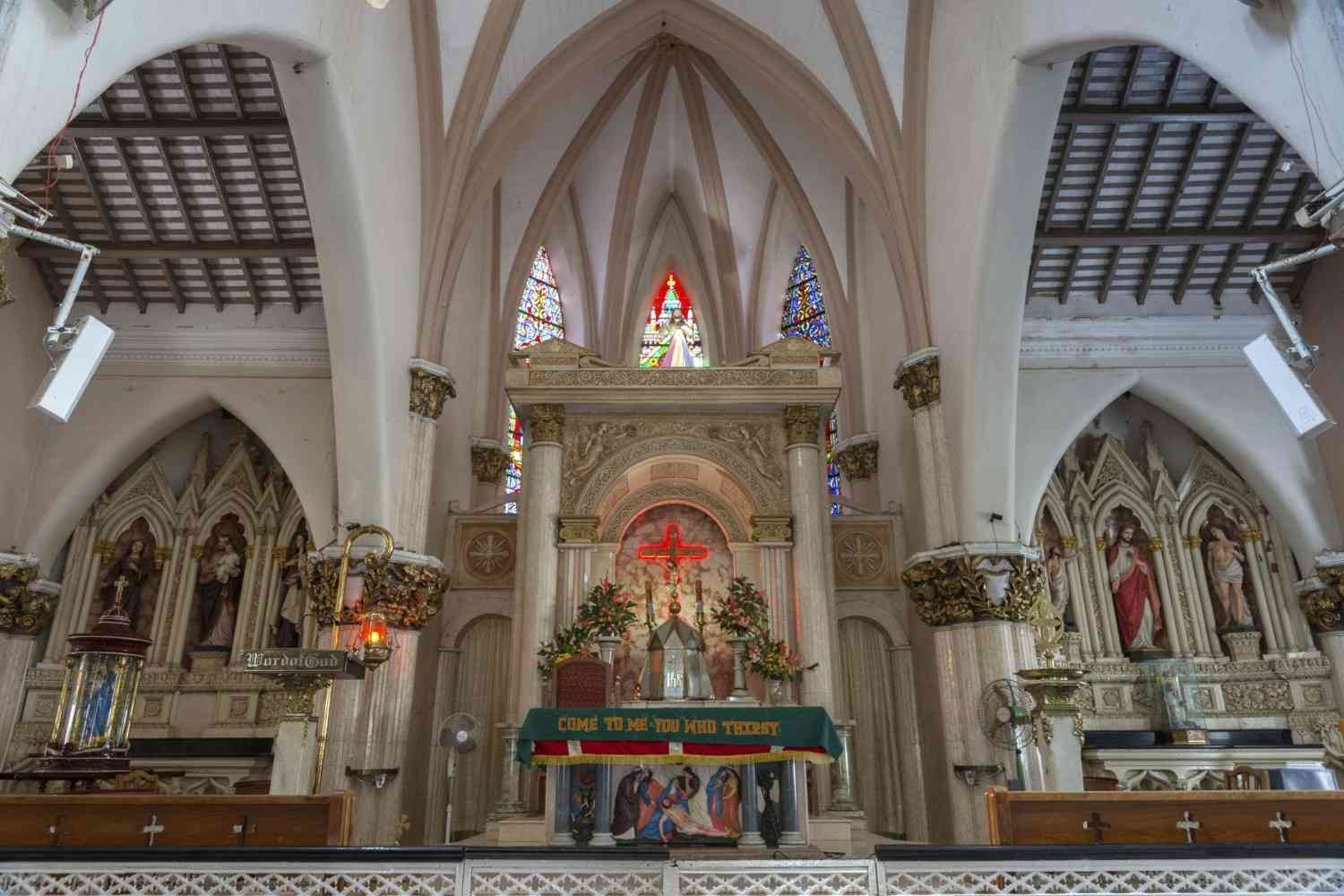
The cathedral is a beautiful colonial-style structure modeled on the lines of St. Paul’s Cathedral, London, with a dome, semi-circular chancel, and Roman arches. The entrance of the cathedral features elaborate woodwork with ornate carvings, while the ceilings and domes are majestically crafted. The bell is among the most well-maintained church bells in India, and the stained glasswork further enhances the beauty of the cathedral. The church measures 100 Γ— 53 Γ— 20 ft and was the only government church under the Government of the British Madras Presidency in Bangalore. The extension in 1901 was also funded by the Government of British India, and the renovated church was dedicated on 26 August 1902 by Bishop Whitehead of Madras.

The cathedral is an architectural marvel that evolved over time through successive restoration and reconstruction works. As a result, the building reflects a blend of different architectural styles. Italian marble from Genoa was used in designing the pulpit and the font used for baby baptisms. The marble pulpit was created by M/s Snaize & Co., and Bishop Tubbs of Palayamkottai was the first to preach from the marble pulpit on 1 July 1928. The brass lectern (an eagle with spread wings on the globe) was presented by planters of Mysore in 1903 in memory of Harry Alexander Campbell and Montague Beaden Follett. Though once described as unattractive by a historian in the late 1800s, the church has grown into a beautiful cathedral with remarkable architectural character.

The Pipe Organ of St. Mark’s Cathedral

For Glory and for Beauty

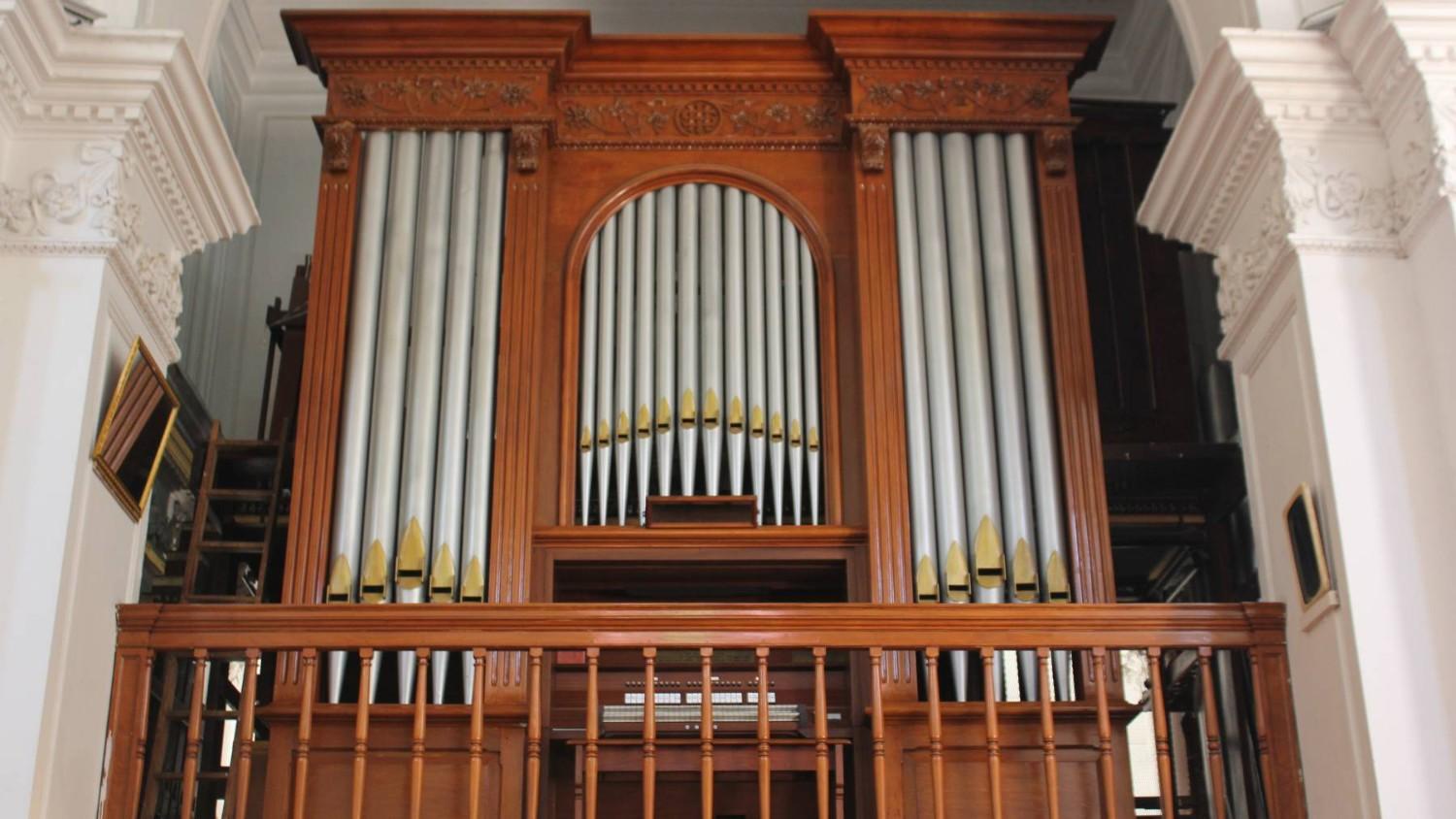
Pipe Organ

Among the many treasures of St. Mark’s Cathedral, Bengaluru, the pipe organ holds a place of special significance. Built in England by Hill, Norman & Beard and donated in 1928 by the Colin Cowdrey family, this historic instrument has enriched the cathedral’s worship for nearly a century.

Originally constructed with

17

Ranks
of pipes across

2

Manuals
β€” the Great and the Swell β€” along with a thirty-note pedalboard, the instrument produces an extraordinary range of sound. Its largest pipes, rising up to

16 ft

Height
, create the deep foundation tones, while the smallest pipes generate the brilliant upper harmonies that give the organ its characteristic splendour.

At the heart of the instrument’s voice lies the diapason chorus, the noble and balanced tone that forms the foundation of Anglican hymn singing. Together with flutes, strings, and mixture stops, the organ is capable of supporting a wide range of sacred music, from the grandeur of Baroque repertoire such as Bach and Handel to the warmth of the English Romantic tradition.

In 2006 the organ underwent a significant restoration by Orgelbau Felsberg of Switzerland. The ageing tubular pneumatic mechanism was replaced with a modern electromagnetic action, the pipework was carefully repaired and regulated, and the wind system strengthened, ensuring the instrument’s continued reliability.

Much of the organ’s preservation is owed to the devoted stewardship of the late Prof. David Sebastian, who served as Organist-in-Charge for more than forty years. As the instrument approaches its centenary in 2028, ongoing care and restoration will help preserve this remarkable voice of worship β€” that it may continue to sound forth for glory and for beauty for generations to come.

Birthdays & Anniversaries
Birthdays & Anniversaries ×
No celebrations today
Check back later
Upcoming Events
24
Dec
Upcoming Events ×
Live / Latest Stream
Live Streaming
Γ—